When you pay $99 per month for a SaaS tool, have you ever wondered where that money actually goes? The answer might surprise you, and understanding it can help you make smarter decisions about the software you choose.
The typical software company operates very differently from what most people assume. The money you pay does not primarily fund the engineers building your features. Instead, it often subsidizes sales teams, marketing campaigns, and investor returns.
Let us pull back the curtain on software company economics.
The Typical SaaS Spending Breakdown
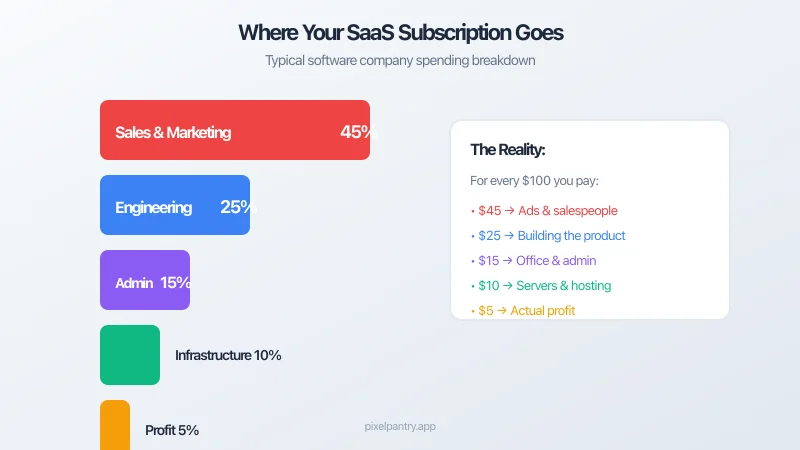
Public software companies must disclose their financials, giving us a window into how they allocate resources. The patterns are remarkably consistent across the industry.
Where Your Subscription Dollar Goes
For every dollar you pay to a typical VC-backed SaaS company, here is roughly where it ends up:
- Sales and Marketing: 40-50% - By far the largest expense for most software companies
- Research and Development: 20-30% - This includes engineering, product, and design
- General and Administrative: 15-20% - Executive salaries, legal, HR, facilities
- Cost of Revenue: 15-25% - Hosting, support, and service delivery
- Profit Margin: Often negative - Many SaaS companies lose money while growing
Look at those numbers carefully. The largest category is not building the product you use. It is convincing people to buy it.
Why Software Is Expensive: The VC Influence
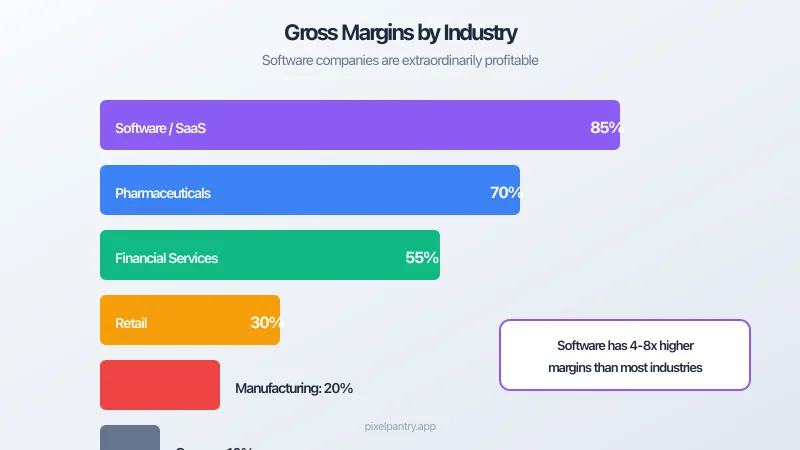
To understand why software costs what it does, you must understand venture capital and its influence on the industry.
The Growth Imperative
Venture-backed companies operate under intense pressure to grow revenue rapidly. A typical expectation is 3x growth in year one, 3x in year two, and 2x annually after that. This is not sustainable through organic growth alone.
To achieve these targets, companies:
- Raise prices as high as the market will bear
- Spend aggressively on sales and marketing to acquire customers faster
- Prioritize features that drive new sales over improvements for existing users
- Focus on enterprise customers who pay more per seat
The User-First Alternative
At Pixel Pantry, we chose a different model entirely. Our tools are free because we eliminated most of the expenses that drive software pricing.
What We Do Not Do
- No sales team: We do not employ salespeople or spend on enterprise sales motions
- No paid advertising: We grow through word of mouth and organic search
- No VC funding: We have no investors demanding returns
- No artificial growth targets: We grow at a sustainable pace
What This Enables
By eliminating these costs, we can offer tools for free that would cost $20-100/month from traditional software companies. Our only expenses are engineering time and modest hosting costs.
We believe this model represents the future of software. As AI reduces development costs and users become more savvy about software economics, the traditional VC-backed model will face increasing pressure.
The Path Forward
Software has been expensive because business models demanded it, not because delivering it actually costs that much. As these business models face pressure from AI, open source, and user sophistication, pricing will fall.
At Pixel Pantry, we are not waiting for this future. We are building it now. Our commitment to free tools for business owners reflects our belief that software should serve users, not extract maximum value from them.
The next time you see a software price tag, remember: most of that money is not building better software for you. It is funding sales teams, marketing campaigns, and investor returns. There is often a better way.