Venture capital gets the headlines, but most successful businesses are bootstrapped. They grow sustainably, retain full ownership, and build lasting value without giving away equity to investors.
This guide shows you how to bootstrap effectively using modern free tools and strategies.
Why Bootstrap?
Bootstrapping offers advantages that funded startups cannot match:
- Full ownership: You keep 100% of your company
- Full control: No board meetings, no investor pressure
- Sustainable growth: Focus on profitability from day one
- Customer focus: Your only stakeholders are customers
The Modern Bootstrapping Advantage
Bootstrapping in 2026 is easier than ever. Free and low-cost tools have eliminated most startup costs:
- Hosting: Free tiers from Vercel, Netlify, Railway
- Development: AI tools cut development time by 55%
- Marketing: Social media and content marketing cost nothing but time
- Operations: Free tools for everything from accounting to customer support
The Bootstrapping Roadmap
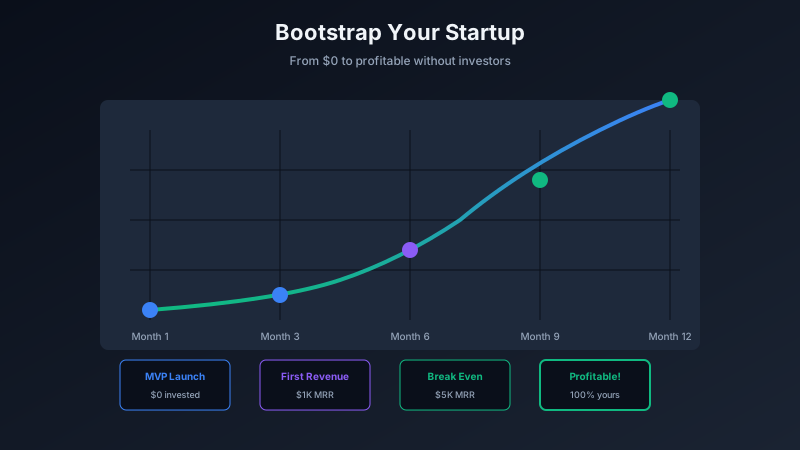
Month 1-3: Validate and Launch MVP
Build the simplest version of your product that solves a real problem. Use no-code tools or vibe coding with AI to ship quickly.
Total investment: $0-100
Month 3-6: First Revenue
Focus relentlessly on getting paying customers. Even small amounts validate that you are building something people want.
Target: $1,000 MRR (Monthly Recurring Revenue)
Month 6-9: Product-Market Fit
Listen to customers, iterate rapidly, and find the features that drive growth. This is where most startups either take off or pivot.
Target: $5,000 MRR
Month 9-12: Sustainable Growth
With product-market fit established, focus on scaling what works. Reinvest revenue into growth.
Target: Profitability and sustainable growth
Cost-Cutting Strategies
Use Free Tools
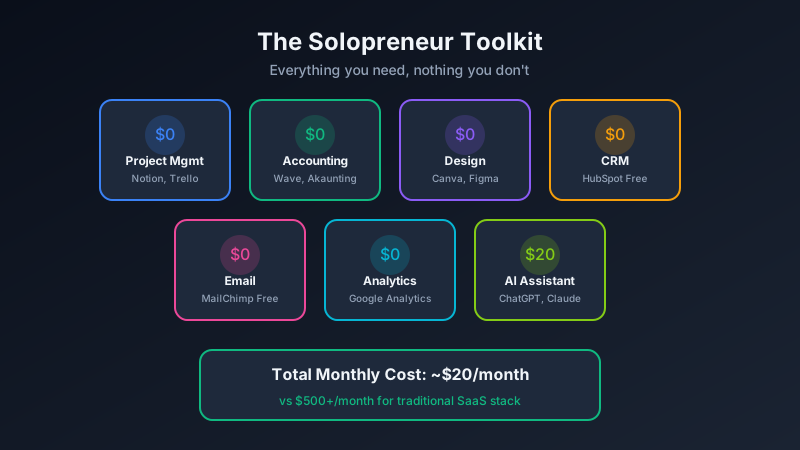
The solopreneur toolkit costs under $20/month for everything a startup needs.
Trade Time for Money
Early on, do everything yourself. Learn the fundamentals before hiring or outsourcing.
Grow Organically
Content marketing, SEO, and word-of-mouth cost nothing but effort. They also build sustainable traffic that does not disappear when you stop paying.
Common Bootstrapping Mistakes
- Building too long without customers: Ship early, get feedback, iterate
- Spending on unnecessary tools: Free alternatives exist for almost everything
- Ignoring unit economics: Know your costs and margins from day one
- Growing too fast: Sustainable beats fast when you are self-funded
The Pixel Pantry Story
Pixel Pantry is bootstrapped. We build free tools because we believe quality software should be accessible to everyone, not just those who can afford expensive subscriptions.
We do not have investors to please or quarterly targets to hit. We focus on building useful software and letting word-of-mouth do the marketing.
That is the bootstrapping advantage: freedom to build what matters.