Small business AI adoption has jumped to 68% in 2025, with owners reporting cost savings of 25-40% in their first year and productivity improvements exceeding 50%. The question is no longer whether to adopt AI automation, but where to start.
This guide walks you through practical AI automation strategies that work for businesses of any size, without requiring technical expertise or massive budgets.
Why AI Automation Matters for Small Business
For years, automation was the domain of large enterprises with dedicated IT departments. That has changed dramatically. Today's AI tools are designed for non-technical users, with interfaces that feel more like having a conversation than programming a computer.
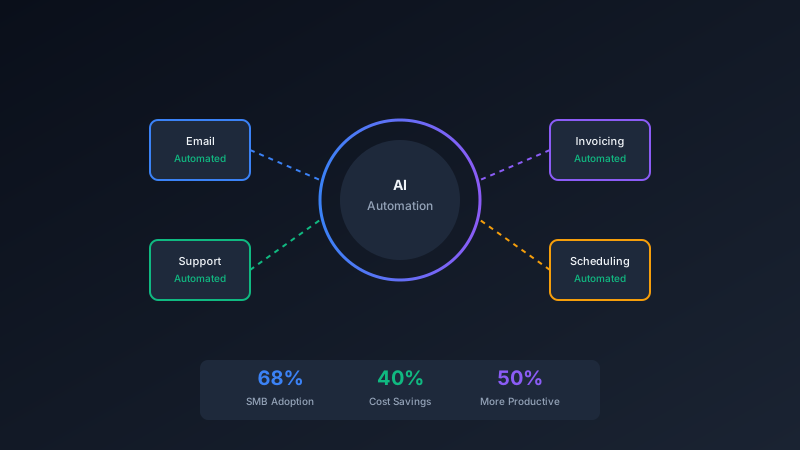
The numbers tell a compelling story. Businesses using AI automation report:
Where to Start: High-Impact, Low-Effort Automations
1. Customer Service Automation
AI-powered chatbots can now handle 60-80% of routine customer inquiries. They provide 24/7 availability while freeing your team for complex issues that require human judgment.
Start simple: set up automated responses for your most common questions. Most businesses find that 10-20 questions account for 80% of customer inquiries. Automate those first.
2. Email and Communication
Tools like ChatGPT and Claude can draft emails, summarize long threads, and even suggest responses. What once took 30 minutes of careful writing can happen in seconds.
For Pixel Pantry users, this pairs well with our productivity tools that help you manage communications more efficiently.
3. Financial Management
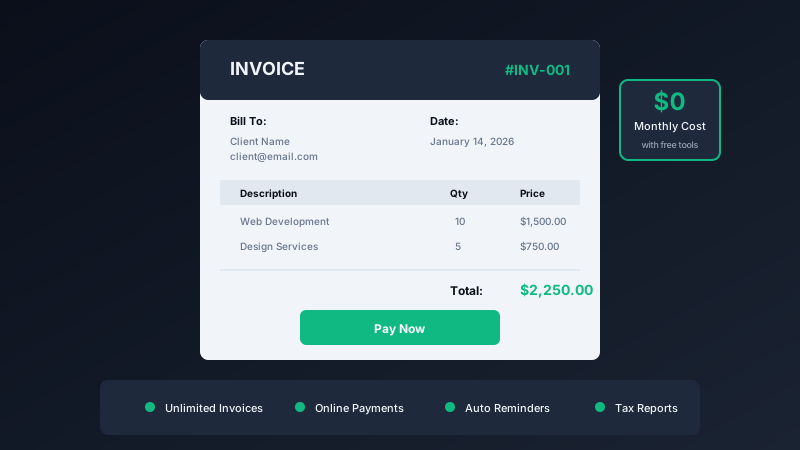
AI-powered accounting tools can categorize expenses, reconcile transactions, and generate reports automatically. This reduces bookkeeping time by 60-80% while improving accuracy.
4. Content Creation
Need blog posts, social media updates, or marketing copy? AI writing assistants have become remarkably capable. They will not replace human creativity, but they can handle first drafts and routine content.
The Right Tools for Small Business
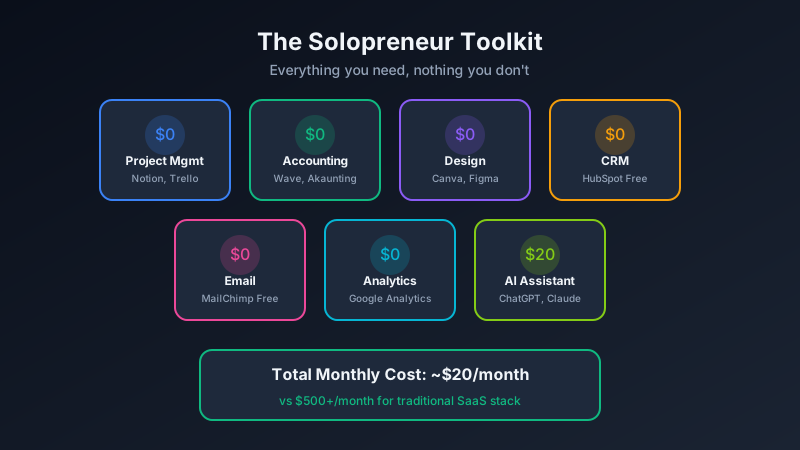
You do not need expensive enterprise software. Many powerful AI tools are free or cost less than $30 per month:
- Zapier - Connects your apps and automates workflows with an AI assistant that builds automations from plain English descriptions
- ChatGPT/Claude - General-purpose AI assistants for writing, analysis, and problem-solving
- Canva - AI-powered design tools for marketing materials
- Google Workspace with Gemini - AI assistance built into tools you already use
Implementation Strategy
The key to successful AI adoption is starting small and expanding based on results:
- Identify your biggest time sinks. Where do you or your team spend hours on repetitive tasks?
- Start with one automation. Pick the task that is both time-consuming and relatively simple.
- Measure the results. Track time saved and quality of output.
- Expand gradually. Once one automation is working smoothly, add another.
Common Concerns Addressed
Will AI Replace My Employees?
AI is best used to augment human workers, not replace them. It handles routine tasks so your team can focus on work that requires creativity, judgment, and human connection.
Is It Secure?
Reputable AI tools take security seriously, but you should still be thoughtful about what data you share. Avoid inputting sensitive customer information into general-purpose AI assistants.
What About Quality?
AI output requires human review, especially at first. Think of AI as a capable assistant that produces good first drafts, not a replacement for human judgment.
Getting Started Today
You do not need to transform your entire business overnight. Pick one task that frustrates you - maybe it is writing follow-up emails, scheduling social media posts, or categorizing expenses - and find an AI tool to help.
At Pixel Pantry, we believe the best tools are ones that make your work easier without adding complexity. That is why our applications focus on doing one thing really well, with simple interfaces that anyone can use.
The AI revolution is not about replacing human workers or requiring technical expertise. It is about giving small businesses access to capabilities that were once reserved for large enterprises. And that future is available today.