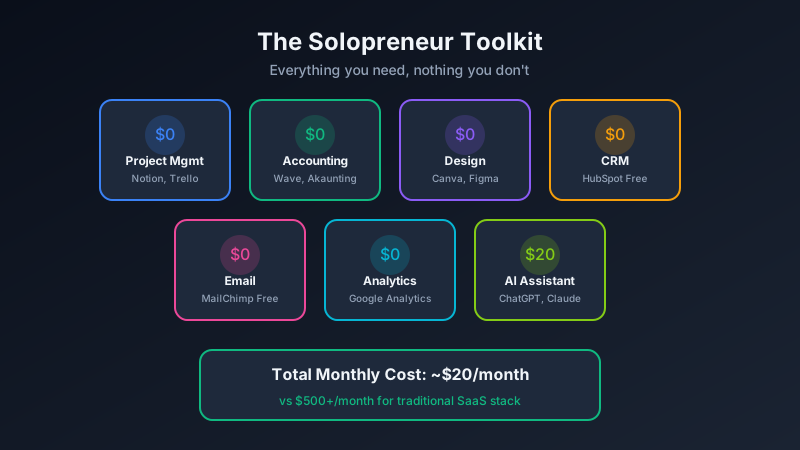
The SaaS pricing model that has dominated software for the past fifteen years is facing existential pressure. Tools that once commanded $99 or more per month are trending toward free, and the forces driving this change are only accelerating.
This is not a prediction about some distant future. It is an analysis of trends already underway. Understanding these dynamics can help you make smarter decisions about the software you buy today and position you for the changes ahead.
Current Pricing Models and Their Vulnerabilities
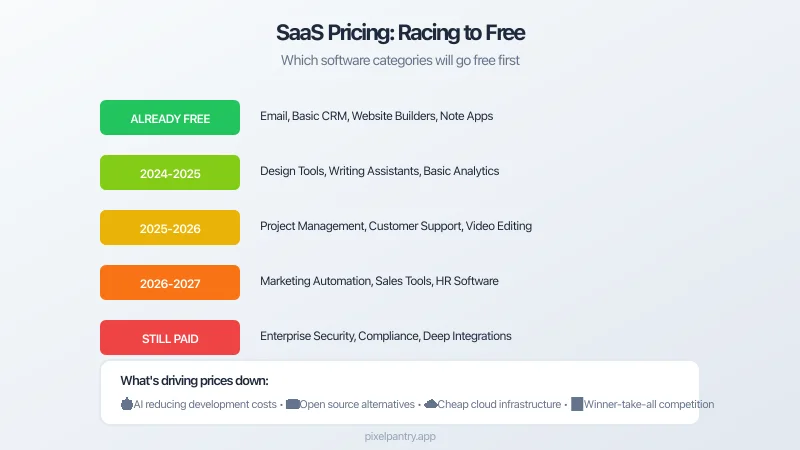
Before examining where pricing is heading, let us understand how software companies set prices today.
Value-Based Pricing
Most SaaS companies price based on perceived value, not cost. If their software helps you make or save $10,000, they might charge $1,000. The actual cost to serve you might be $10.
This model works when alternatives are limited or inferior. But it creates enormous vulnerability: if a comparable alternative emerges at a lower price, the value-based premium collapses.
Forces Driving Prices Toward Zero
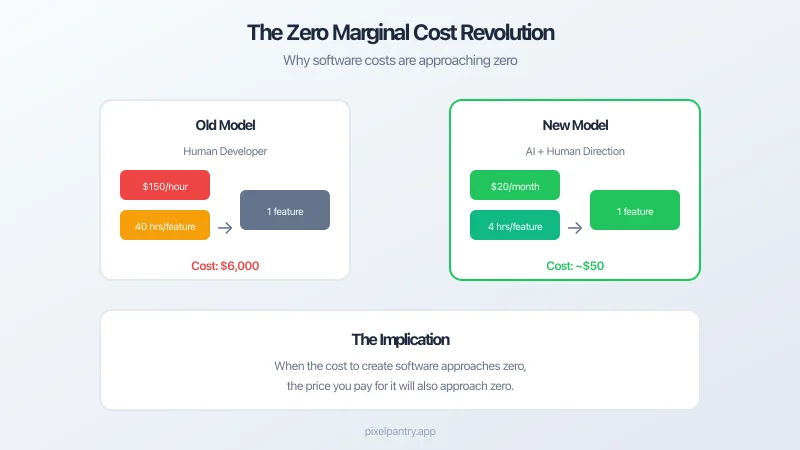
Several powerful forces are converging to push software prices down.
AI Reducing Development Costs
As we have discussed in our article on the zero-cost code future, AI is dramatically reducing the cost to build software. When competitors can create capable alternatives at a fraction of historical costs, pricing power erodes.
Open Source Maturation
Open source alternatives continue improving in quality and usability. Projects that were once developer-only tools now offer polished interfaces accessible to business users.
Our Approach at Pixel Pantry
At Pixel Pantry, we are not waiting for this future. We are building it now.
We offer free tools for business owners because we believe software should serve users, not extract maximum revenue from them. The economics increasingly support this approach, and we would rather lead the change than be disrupted by it.
Our tools include no hidden monetization. No data selling. No premium tiers for basic functionality. Just useful software, available to everyone.
The race to the bottom is not a bug in the software market. It is a feature that ultimately serves users. And that race is well underway.