Every day, we trust software companies with our most sensitive information - documents, messages, financial data, photos. But do we really understand where that data goes and who can access it?
Privacy-first software offers an alternative: applications designed from the ground up to keep your data under your control.
The Problem with Cloud-First Software
Most modern software follows a cloud-first model. Your data lives on someone else's servers, processed by their systems, subject to their policies. This creates several concerns:
- Data breaches: When companies store millions of users' data, they become attractive targets for hackers
- Policy changes: Terms of service can change, and suddenly your data might be used in ways you did not anticipate
- Company shutdowns: If a service goes out of business, your data might disappear with it
- Government access: Data stored on servers can be subpoenaed, often without your knowledge
What Makes Software Privacy-First?
Privacy-first software follows several key principles:
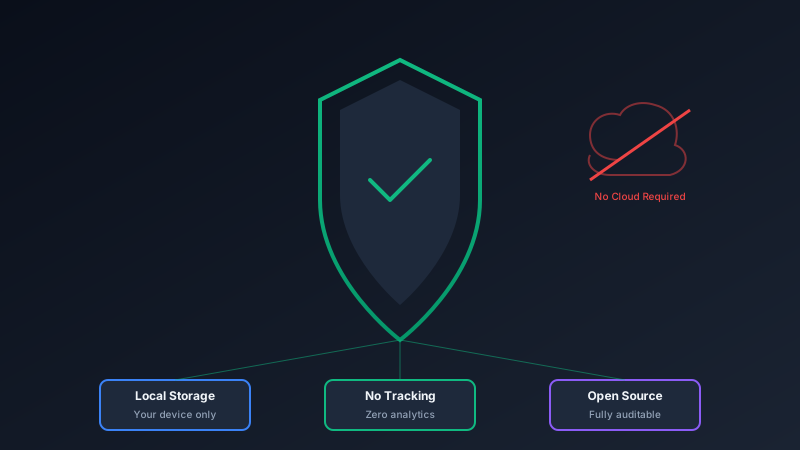
Local Storage
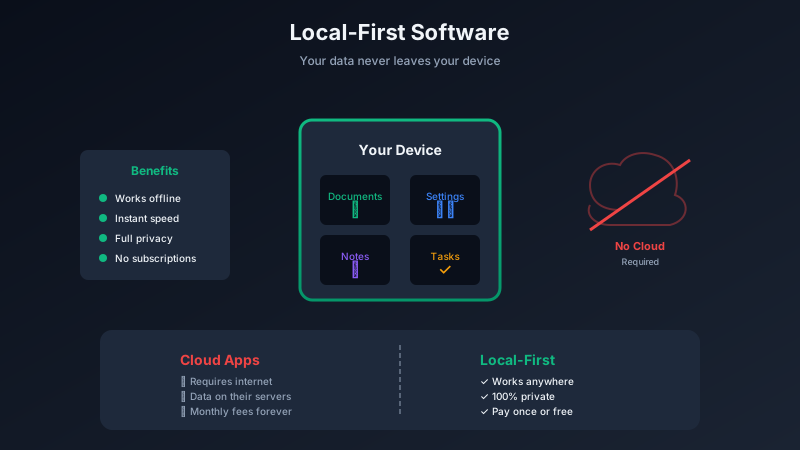
Your data stays on your device. No cloud servers, no sync services that can be compromised. You control where your files live.
No Tracking
Privacy-respecting software does not collect analytics, track your usage patterns, or build profiles about you. It simply works.
Open Source
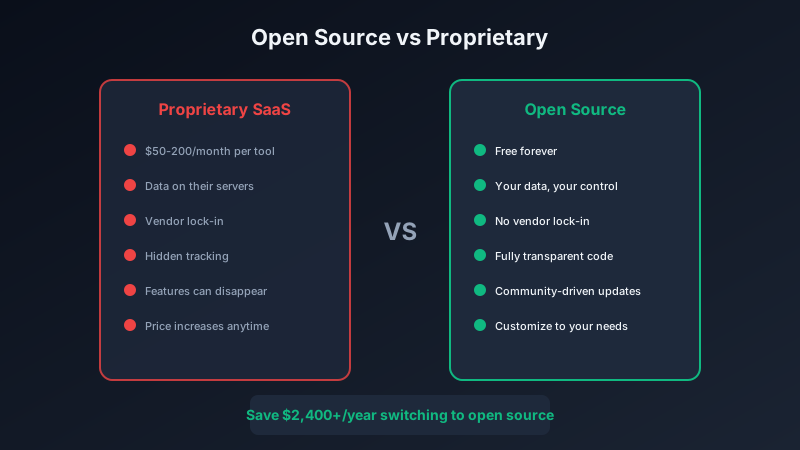
When code is open source, anyone can inspect it. There are no hidden trackers, no secret data collection, no surprises. What you see is what you get.
Minimal Permissions
Privacy-first apps request only the permissions they actually need. A note-taking app does not need access to your contacts.
Finding Privacy-First Alternatives
For nearly every cloud-based service, there is a privacy-respecting alternative:
- Note-taking: Joplin, Obsidian, or Standard Notes instead of Evernote
- Messaging: Signal instead of WhatsApp or Facebook Messenger
- Email: ProtonMail or Tutanota instead of Gmail
- Password management: Bitwarden instead of LastPass
- File storage: Local storage or self-hosted solutions instead of Dropbox
The Pixel Pantry Philosophy
At Pixel Pantry, privacy is not an afterthought - it is a core principle. Our applications are designed to work locally whenever possible. Your data stays on your device, where it belongs.
We do not collect analytics about how you use our tools. We do not track your behavior. We do not sell your data because we do not have your data to sell.
This approach has tradeoffs. We cannot offer cloud sync out of the box. We cannot provide personalized recommendations based on your usage. But we believe the tradeoff is worth it.
Making the Switch
Transitioning to privacy-first software does not have to happen all at once:
- Audit your current tools. Make a list of the software you use daily and what data each one has access to.
- Prioritize sensitive data. Start with applications that handle your most sensitive information - passwords, finances, health data.
- Research alternatives. Resources like PrivacyGuides.org and AlternativeTo.net can help you find privacy-respecting options.
- Migrate gradually. Move one category at a time rather than trying to change everything at once.
The Future is Local
There is a growing movement toward local-first software - applications that work offline, store data locally, and optionally sync using end-to-end encryption. This approach gives you the best of both worlds: modern functionality with genuine privacy.
Your data is valuable. Not just to hackers and advertisers, but to you. It represents your thoughts, your work, your relationships. Choosing privacy-first software is choosing to keep that value in your own hands.