The software landscape is shifting beneath our feet. Tools that cost hundreds or thousands of dollars per year are being replaced by AI-powered alternatives that deliver equal or better results at a fraction of the cost. This is not speculation about some distant future. It is happening now.
Businesses are canceling expensive subscriptions and switching to AI tools that accomplish the same tasks more efficiently. Here are ten categories where AI is replacing traditional software, along with specific tools and practical migration advice.
1. Writing and Content Creation
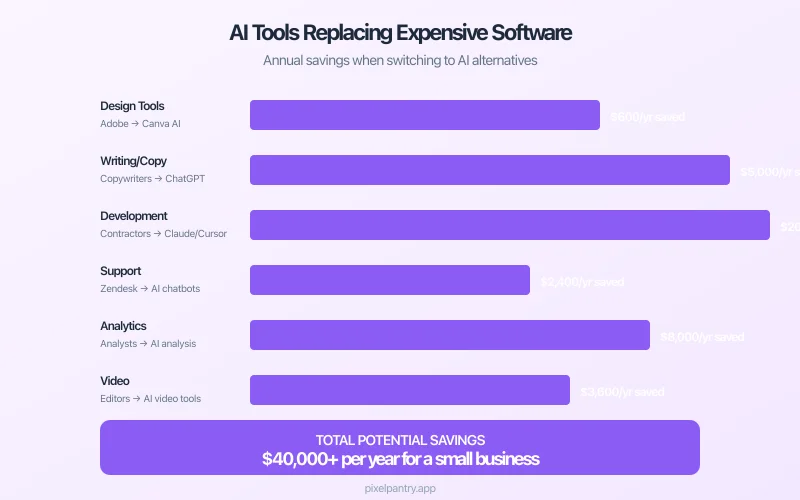
Replacing: Grammarly, Jasper, Copy.ai
Traditional cost: $12-100/month per user
AI alternatives: Large language models and general-purpose AI assistants
Annual savings: $144-1,200 per user
The first wave of AI disruption hit content creation tools hardest. Dedicated copywriting and grammar tools that once commanded premium prices are now outclassed by general-purpose AI assistants.
2. Design and Graphics
Replacing: Adobe Creative Suite, Canva Pro
Traditional cost: $13-60/month per user
AI alternatives: Midjourney, DALL-E, Stable Diffusion, Adobe Firefly
Annual savings: $156-720 per user for non-professional use
For many business users, professional design tools are overkill. AI image generation handles common design needs at a fraction of the cost and without the learning curve.
3. Code Development
Replacing: GitHub Copilot, specialized IDE features
Traditional cost: $10-40/month per developer
AI alternatives: General AI assistants for coding assistance, Cursor IDE
Annual savings: $120-480 per developer (though many choose to use multiple tools)
AI has transformed software development. What once required senior developers can now be accomplished by junior developers with AI assistance.
The Bigger Picture
This shift from specialized software to AI tools is just beginning. As AI capabilities expand, more categories will face disruption. The businesses that adapt early will have cost advantages and greater agility.
At Pixel Pantry, we are building free tools that leverage these same AI capabilities. Our goal is to make powerful software accessible to everyone, not just those who can afford expensive subscriptions.
The era of paying hundreds of dollars monthly for software that AI can replace is ending. The question is not whether you will make these transitions, but when.